Getting a good night’s sleep in the wilderness depends on a lot of variables. Don’t forget the sleeping pad!
by Leon Pantenburg
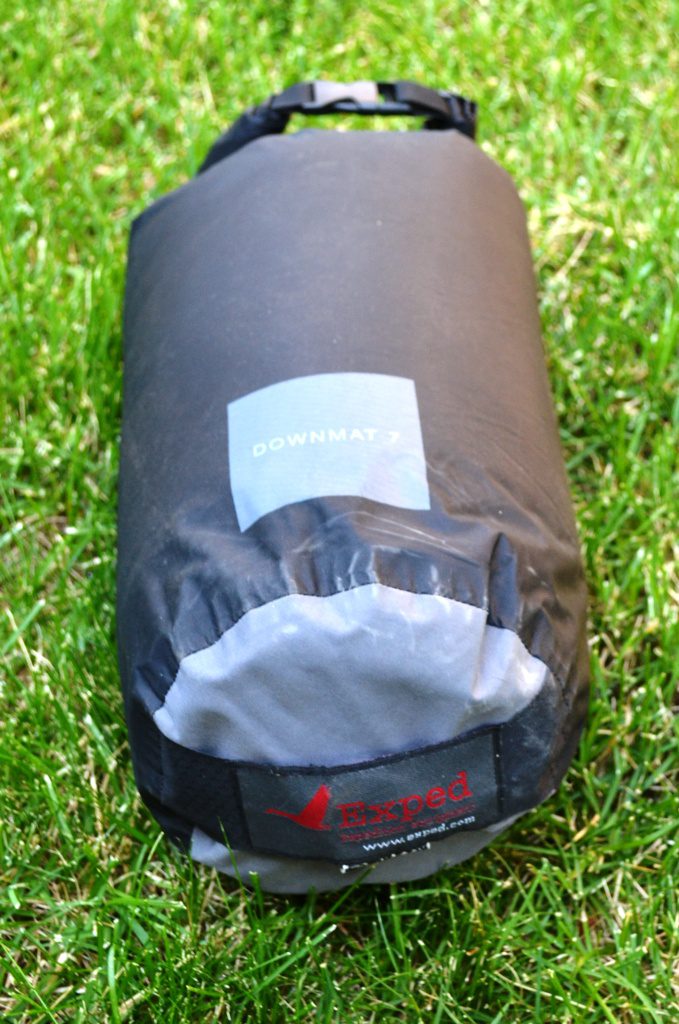
Several years ago, my wife bought me an insulated air mattress for backpacking. It was the Exped Downmat 7 and cost about $150. I thought the price exorbitant until the first use. I was at a January campout in Oregon’s Cascades Mountains and my tent was pitched on ice. All that was between me and the cold was the tent floor, the downmat and my sleeping bag. I slept like a baby.
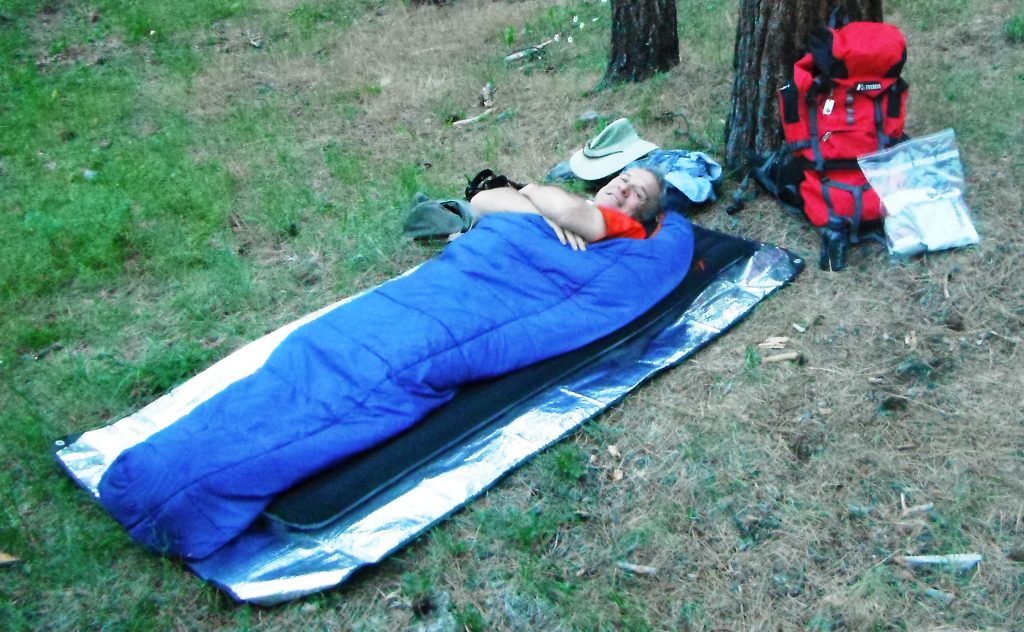
A vital part of your wilderness or camping experience is what you sleep on. Too thin, and your bed is hard and unyielding. An uninsulated standard air mattress can let the cold ground suck the heat right out of you.
Too large, and the sleeping pad becomes difficult to carry and use.
To write this, I got some sleeping pad advice from Bob Patterson, an old friend and camping gear expert. (Check out his creds below!)
“The older one gets the more one gets into comfort,” Patterson said. “I usually use a self-inflating air mattress. It cuts down on the need to call a wrecker to get me out of the bag in the morning!”
According to Patterson, some questions need to be answered before you invest in a sleeping pad. These might include:
What activities will you be doing? Climbing, canoeing, winter camping, car camping?
What is your main concern? Comfort, insulation, weight, bulk?
Once you establish your priorities, consider these aspects of buying a pad:
Where will I be using this? An air mattress that would be very comfortable on a Louisiana summer night will chill you to the bone winter camping in the mountains. And, a hard, non-yielding pad that insulates well may be like sleeping on a board.
How bulky and heavy is it? Anymore, I go light when backpacking. That means the lightest, most effective pad. My Down7 is used in all weather conditions, and it does very well here in Central Oregon. But it might not be the best choice in hot, desert regions.
Here are some choices, according to Patterson:
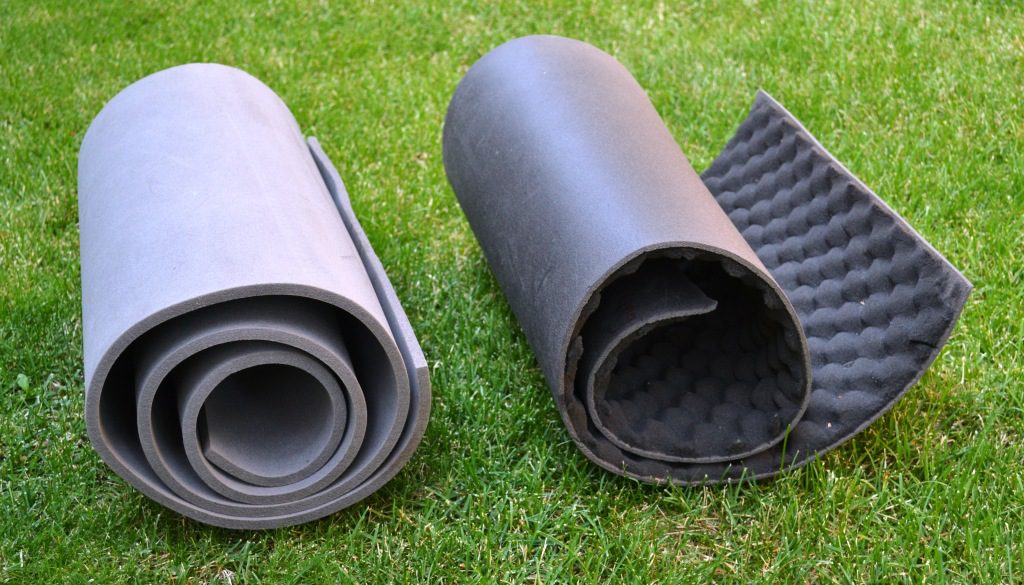
Ensulite is light weight and insulates pretty well, but doesn’t roll very small and isn’t that comfortable by itself. Patterson reports problems with condensation collecting in corrugated and egg crate type of closed cell foam mattresses during winter camping.
Self-inflating mattresses are comfortable and convenient, and roll fairly tightly, but don’t insulate that well, and are kind of heavy.
Stay away from vinyl air mattresses for camping, they are for the pool or lake.
Air mattresses in general have one important built in defect: potential leakage.
“Any mattress that blows up needs a repair kit to accompany it,” Patterson said. ” An air mattress with a hole isn’t any good. If you blow up your air mattress by mouth, you can end up with icing problems in cold weather.”
Here is what Patterson uses:
Car camping or in a hunting base camp: “I use my self-inflating four-incher when there are no weight or bulk considerations,” he said. “I hate rolling off, or having my arms fall off, of the side of 20-inch wide mattresses, so mine are 25 or 30 inches wide and full length. They are a little heavier, but the comfort for a good night’s sleep is worth it. ”
The 1” or 1.5” thick usually provide enough padding for comfort, he added.
“During the (2007) Boundary Waters Canoe Area Honeymoon Lake Fire evacuation, we ended up sleeping on only our self-inflating pads, on a granite slab by the shore of Lake Superior,” Patterson said. ” They were OK, but that’s probably the extreme test.”
Winter camping in cold weather: “I have used a three-inch thick self-inflating pad, but it’s heavy and bulky,” Patterson said. “It only works when pulling equipment on a sled.”
The best winter system Patterson calls the “best of two worlds” is a regular one-inch or or 1.5-inch self-inflating mattress coupled with an Ensulite pad on the bottom.
” In winter, it takes longer for self-inflating mattresses to blow up. Be careful about topping them off by blowing on the valve in subfreezing temperatures,” Patterson said. “Breath moisture can result in valve freezing and internal freezing, making them difficult to roll up. The ice may prevent proper inflation the next time.”
Use these suggestions to decide what is going to work the best for you in your particular circumstances. No matter what your final sleeping pad choice is, though, make sure it will work for you most of the time.
“My main advice for all gear is: If you can only have one, buy one for the conditions you will use it in 90 percent of the time,” Patterson said. “An ounce of technique is worth a pound of technology. Learn and develop techniques to cope with occasional extreme conditions. If you can afford to get specialized equipment for extremes, go for it.”
Bob Patterson
Bob Patterson is a retired firefighter and Emergency Medical Technician, and as part of his job, was outdoors in all kinds of weather year-round. A skilled outdoorsman, Patterson is a regular in the Boundary Waters Canoe Area Wilderness every year, and is a former member of the National Ski Patrol. He does a lot of northern Minnesota COLD camping.
Before he went to work as a firefighter, Bob sold sporting goods and outdoor equipment for several years in Ames, Iowa. Bob is my former Iowa State University roomate and a long-time family friend. We have hunted, fished, canoed, backpacked, camped and climbed together for decades. Bob’s on my short list of people to hang out with outdoors.
Please click here to check out and subscribe to the SurvivalCommonSense.com YouTube channel – thanks!